
A personal reflection on identity, freedom, and the invisible weight of where we come from.
I don’t know if you’ve ever lived outside your home country.
If you have, then we understand each other. If you haven’t, you’ve probably heard something about it from someone close to you.
One of the most important things that kind of experience has done for me is push me to become more aware of my cultural identity.
Recently, I read a lot of comments on one of my TikTok videos related to my accent. And from there, a whole discussion opened up among viewers about what it means to be Peruvian abroad.
While it’s true that everyone has their own experience and opinion, this is the platform I have to share mine.
And we don’t need to agree on who’s right or wrong.
It’s more about recognizing each other.
And to recognize each other, we have to know each other first.
Some people say your accent never disappears if you’re truly Peruvian.
Others say it depends on who you interact with. Some say they lose their accent quickly. I think all those versions are valid.
On cultural identity
To talk about identity, we should probably start by defining culture itself.
The RAE (Royal Spanish Academy) offers two definitions:
- A set of knowledge acquired by a person that allows them to develop critical thinking and judgment.
- A set of ways of life, knowledge, and degree of development of a time or a group.
So if we’re going to use criteria to compare cultures, I’ll start with those.
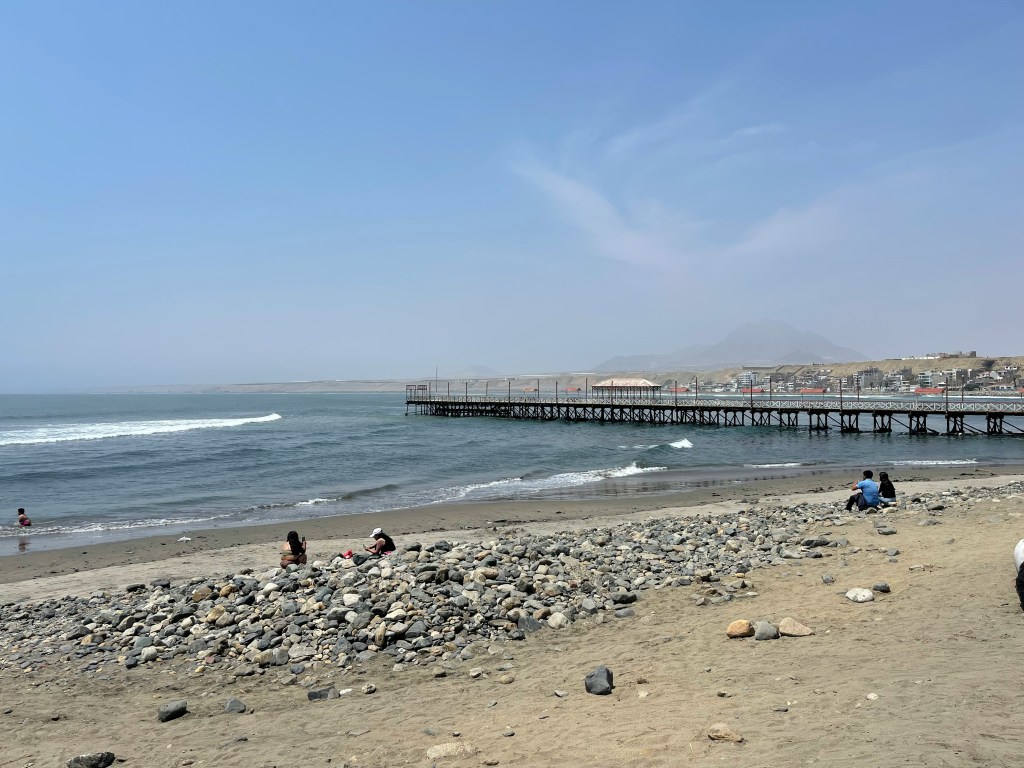
I lived 27 years in Peru. Twenty-four of them in my hometown in the north, and three in Lima, the capital. Both cities sit on the Pacific coast.
I then lived half a year in Ankara, Turkey (inland), nine months in Oradea, Romania (near Hungary), and nine years in Bucharest (southeast Romania, also inland).
Two-thirds of my life in Peru.
One third in Romania.
Some Romanians have told me, “We’re Latins too—the Latins of Europe.”
So I respond, “I’m Latin too. Better said: Latin American.”
Why does this matter? Because I’ve needed to understand for myself why there’s a kind of tension in my cultural identity.
Maybe that tension also shows up in my accent.
The truth is, I have an accent in every language I speak—and that doesn’t make me more or less of anything.
To me, my accent is a phonetic trace of my cultural journey.
Who I am (and who I’m not)
I’ve stopped thinking that my cultural identity is just one thing.
It’s more than the sum of the places I’ve lived.
My identity isn’t the language I speak. It’s not my mother tongue or the other ones I’ve learned.
It’s not my gender.
Not my marital status.
Not the color of my skin—whether in Peru or Romania.
Not how I greet someone in my hometown versus my current city.
My identity isn’t the generation I grew up in, or the novelties that came with the newer ones.
But I often feel confronted.
Like when I want to hug someone, but here only a handshake is expected.
When I smile to greet someone in the capital and receive only indifference.
When I hold a door open and no one says thank you.
When I don’t make comments about a woman’s body and others start making them, unfiltered.
When I say I believe in God and doctrine—and someone glances at my piercings and tattoos with confusion.
When people tell me I look Venezuelan in Peru, or Roma in Romania—and it’s not meant kindly.
On freedom
Some people in that video said that freedom doesn’t exist.
They backed it up with political and historical arguments.
I think freedom does exist.
And I don’t think it means living without limits or saying whatever you want.
Freedom looks different for each person.
Some people live their freedom in societies that constantly impose limits they’ll never escape.
Others live their freedom quietly—private, simple—even in places where they’re allowed to do much more.
So what does this have to do with my cultural identity?
I think freedom is both a reality and a consequence of how I think and act.
In Romania, I’m free to live and work—but those are rights I had to ask for. That’s how the system works.
As an immigrant, I’ve only gained a certain level of freedom by learning the language, understanding how things work, adapting.
And by doing that, I’ve been able to assert either my Peruvian culture—or my own evolving mix of cultures.
My cultural inventory
Today, I want to share an inventory of things I’ve noticed while living in Romania that come from my upbringing in Peru—and from my generation.
I don’t share these to say they’re right or wrong.
I just want to name them.
To recognize them.
And share them with you.
- Meals are eaten together, on time, and with whoever’s home. Food is meant to be hot. Cold food is unpleasant. Water is drunk after eating. You finish everything on your plate.
- Talking back to your parents is disrespectful. You only reply when they ask a question.
- You help your younger siblings. You share snacks. You don’t come home eating something you didn’t bring for others.
- If you fight with your siblings, you apologize that same day. And when asking for something, you say: “Can you pass the sugar, little brother/sister?”
- Never visit a friend during their mealtime. Never stay so long that it makes them uncomfortable.
- Wash what you use. Dirty laundry has its place.
- Make your bed when you wake up.
- You didn’t come home late—because it wasn’t safe. You didn’t take taxis—they were expensive, and public transport didn’t run late. Sometimes you knew someone who drove a taxi. You’d call them.
- You didn’t answer phone calls on the street—your phone might get stolen.
- You greet men with a handshake or hug; women with a kiss on the cheek. And you greet everyone in a room, one by one.
- In the markets, you could negotiate food prices—until malls and supermarkets changed everything.
- You had your caserita. Your regular vendor. She gave you better prices.
- You didn’t wear flashy colors. Because people stared. And commented.
’ll stop there for now.
I’ll let you catch your breath.
 Ave Migratoria