
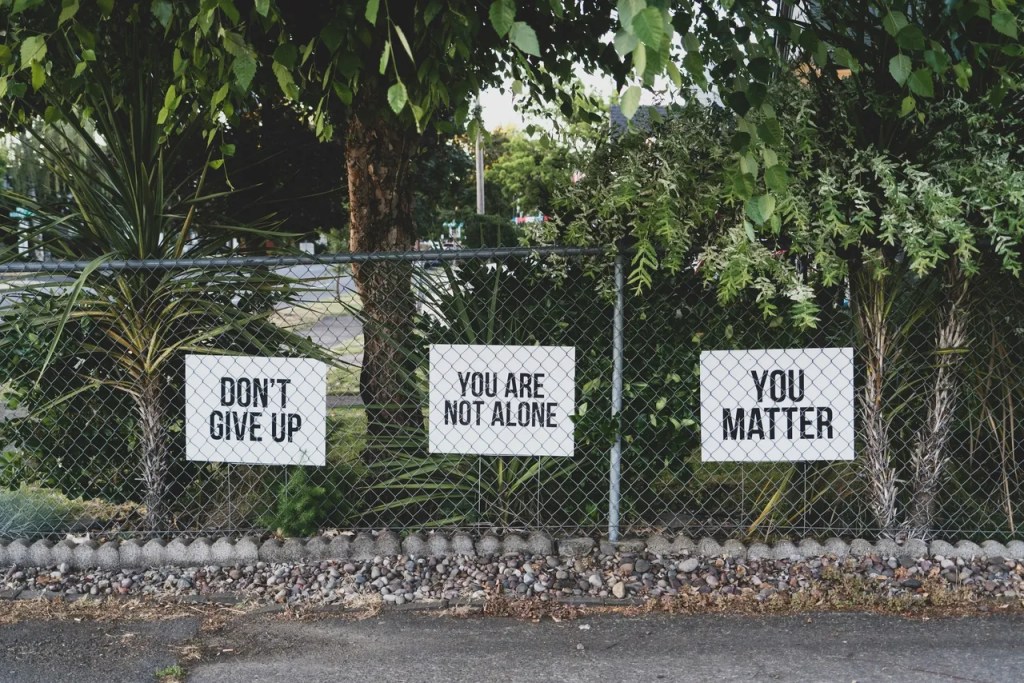
A few months ago, I decided to open up the topic of mental health with those close to me—and even those not so close. At first, I hesitated. How would these conversations go? Would they cause discomfort? Would people avoid the topic? But something changed. The more I spoke about it, the more I realized how many of us struggle in silence, carrying worries, anxieties, and emotions we rarely say out loud. Some people opened up about their own battles, and it made me wonder: why do we hesitate to talk about mental health? And what changes when we finally do?
In 2020, after experiencing persistent, intense lower back pain, I discovered I had sciatica and two herniated discs. Through physiotherapy, massage, and swimming, I met others who had suffered—or were still suffering—from the same condition. I heard countless pieces of advice on how others had treated their pain and how I should treat mine. Finally, after five years, the pain is 80% gone.
One of the biggest barriers I noticed is the fear of being judged, of not being understood, or of being seen as weak. Mental health struggles are often invisible—until they’re not. “It’s all in your head,” some people say. Others dismiss it with, “You think about it too much.”
I realized I often said “I’m fine” when I really wasn’t. That I had gone through difficult situations without fully acknowledging the emotions I felt along the way. The truth is, saying you’re fine doesn’t make the pain go away—it only isolates you more. Breaking that pattern, speaking with honesty, gives you freedom. And it creates space for others to do the same.
In these past months, I’ve listened to stories of burnout, anxiety, depression, trauma from sexual assault, bullying, domestic violence, and even suicide attempts. And with each person, I’ve felt a knot in my stomach and simply said, “Thank you for telling me.” Because I think it’s beautiful when someone opens their heart to share something so important, so personal. And so often judged by society.
During these months, I’ve learned that listening holds just as much power as sharing. That I need to stop trying to “fix” things when someone confides in me—and instead, just let them talk. The more I open my ears to listen, the more I see the stigma around mental health fade away.
When I mentioned that I “go” (I say “go” but really, I just log into a video call) to therapy, someone else asked, “What happened to you that made you need something like that?” I simply responded, “Life. Living is reason enough to need it.”
In these past months, I’ve realized that, just like my herniated discs, mental health isn’t something you can fix with a quick laser procedure. It requires constant work. It takes time. You need a lot of patience with the world and compassion for yourself.
At first, I thought mental health was something you couldn’t see. Because “it’s all in your head.” But now I know that’s not true. I know you can see it. There are countless signals in our bodies—alarms warning us that something isn’t right.
Alongside the stories that leave a lump in your throat, I’ve also heard words of encouragement. Words of love and hope. I’ve discovered new connections—the kind that make you go home with tears in your eyes, but also with a smile.
 Ave Migratoria