
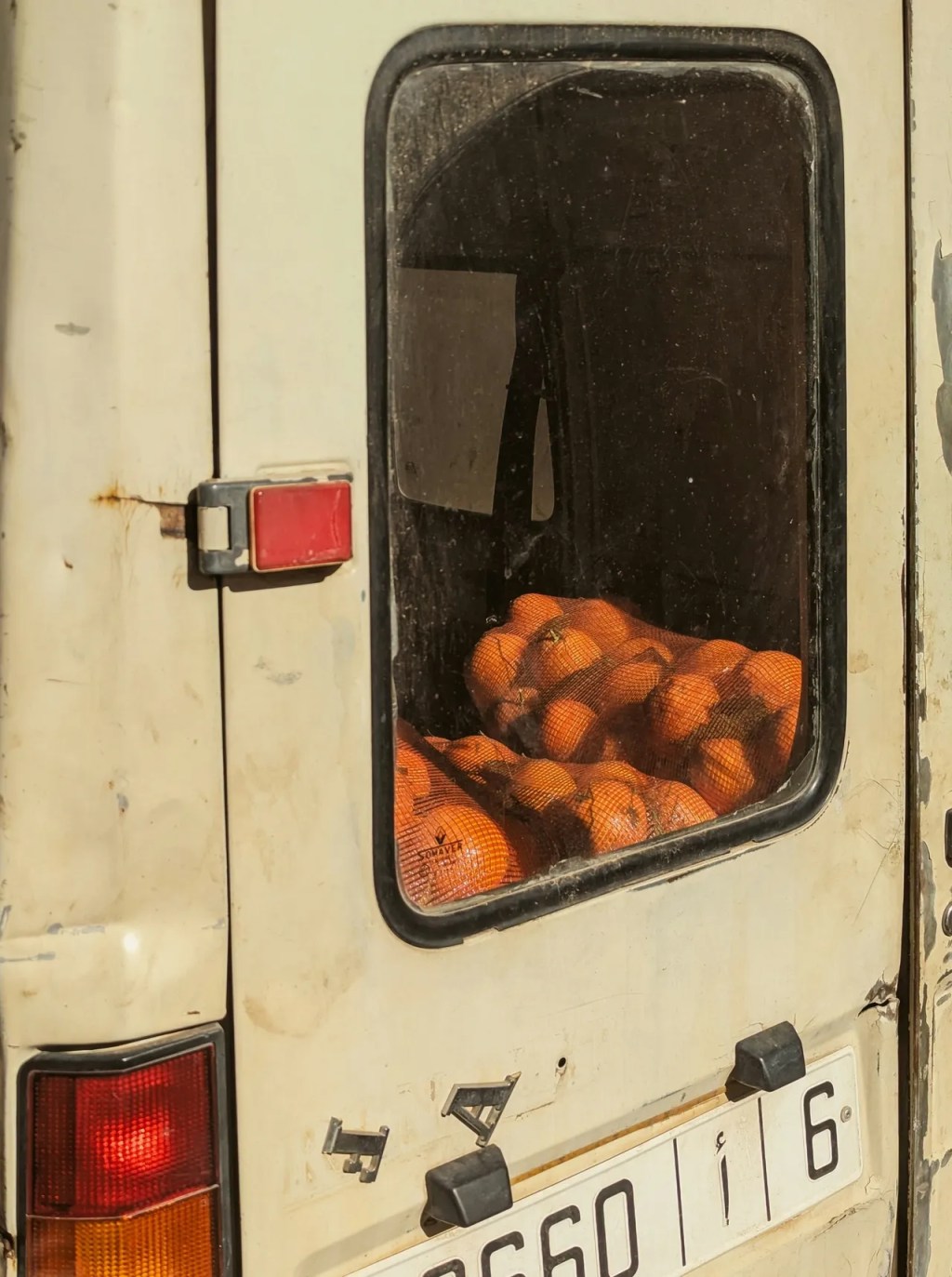
I was standing near the entrance of the bus, and a lady said something to me that I didn’t understand. She repeated it about three times. Finally, she said “switch?” and I still didn’t get it. She made a hand gesture. I realized she wanted to switch places. «Unspoken rules.» Every place has them. Here are a few from Bucharest.
In my hometown, we call it “micro.” I mention my city because public transport isn’t the same across all cities in Peru. I don’t know why we call it that, considering the buses are actually quite large. In Romanian, it’s called autobuz.
Before getting off, in my city, we say «en la esquina baja» (literally, «get off at the corner»). This means the driver should stop at the next visible corner, or wherever they feel like stopping. You’ll probably have to say it loudly and multiple times. Making eye contact with the driver’s assistant is key.
In Bucharest, you just wait for the next stop. If the doors don’t open, you press a button.
In my city, if you want to get off, you should stand near the door to make sure you have time to do so—because the bus won’t wait long. In Bucharest, if it’s crowded, you ask the person in front of you, “Do you get off at the first?” This helps you know if they’ll be leaving at the next stop or if you can switch—remember?—places with them.
When I first came to Bucharest nine years ago, you had to go to a kiosk near a public transport stop to buy a paper or plastic card with one or more rides (for the bus or tram). Not all kiosks accepted card payments, so it was always important to have cash.
In my city, you pay with exact change (coins) to the driver’s assistant. We call them «cobrador» (collector). They had an impressive memory for keeping track of who had paid and who hadn’t. They were also the ones who told you which foot to use to step on or off the bus.
In Bucharest, we now have an app (24pay.ro) to buy tickets or daily, weekly, and monthly passes. There are also electric buses running now, and another app (STB.ro) to check real-time routes and transport locations.
In my city, the buses weren’t always in the best condition—actually, almost never. Sometimes, you’d be surprised by a cloud of black smoke. Other times, you’d find broken or graffitied seats, or ones that barely stayed in place. Some buses had no windows, and the floor was sometimes “cleaned” with oil. I won’t even get into the quality of the streets—that’s a story for another day.
For a long time, I felt anxious about buying bus tickets, not understanding the system, not knowing how to interact with other passengers, and not understanding the language when someone asked me something.
Now, I feel calm—even without headphones. No fear, no anxiety. My only concern is when teenagers get on, because they’re loud and say things that don’t make sense to me.
To wrap up my story—for now—one thing both countries have in common: when the driver is reckless, people in both Peru and Romania say it feels like they’re transporting a sack of potatoes.
 Ave Migratoria